

Smarter Training. Safer Patients
Better Outcomes
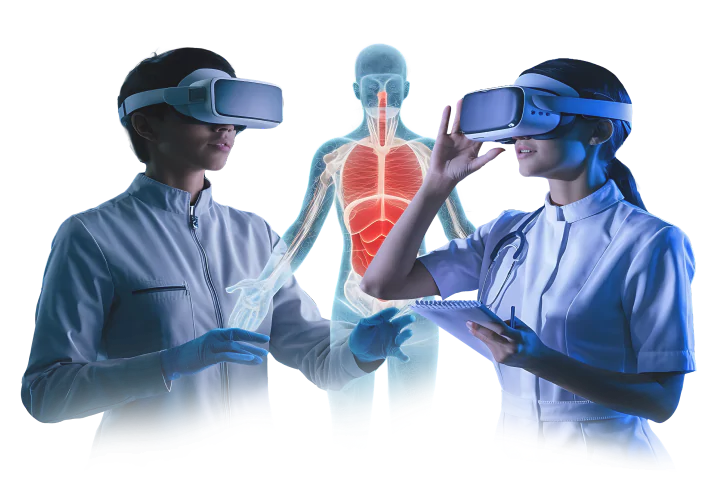
Traditional medical training can’t fully replicate the pressure of a real emergency or the precision of a complex procedure. In the UK, over 11,000 preventable deaths occur every year due to patient safety incidents. In the US, medical errors are responsible for more than 250,000 deaths annually, making them the third leading cause of death. Traina XR bridges this critical gap by allowing healthcare professionals to train in hyper-realistic, zero-risk environments where every mistake becomes a lesson instead of a tragedy.


Our Total Knee Replacement Simulator

With our Total Knee Replacement Simulator, doctors can enter a completely realistic operating room and rehearse every procedure, tool, and choice in a risk-free, realistic setting. The simulator helps surgeons become more confident and proficient long before they operate on a live patient by simulating the entire surgical experience.

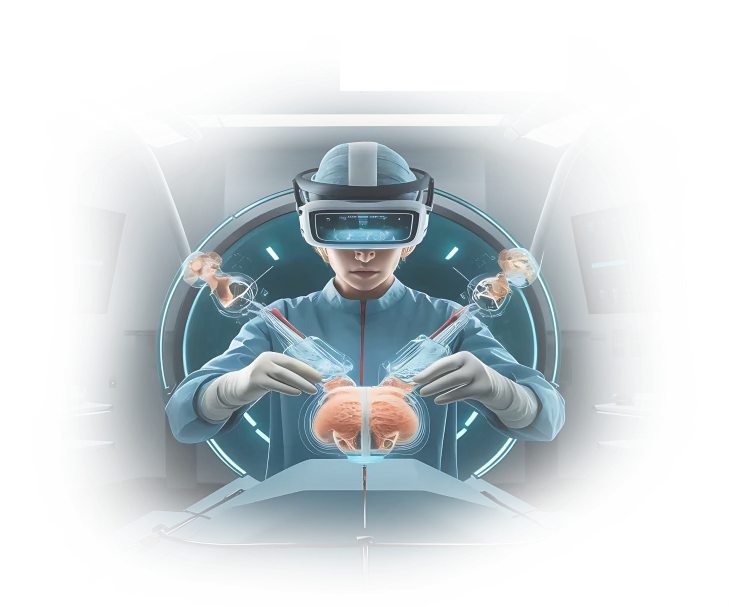
Beyond surgery, immersive XR training transforms healthcare across multiple areas are Surgical Procedure Simulations,>Emergency & Trauma Care,Patient Care & Empathy,Medical Equipment Handling Reducing surgical errors and accelerating skill acquisition doesn’t just save lives it saves millions in malpractice costs, training expenses, and operational inefficiencies. A single XR module can train entire surgical teams for years, delivering long-term ROI and improving patient safety metrics. Studies show that VR-trained surgeons make 83% fewer errors and acquire skills 60% faster compared to traditional methods. Knowledge retention is up to 3× higher, and confidence in high-stakes environments dramatically improves. With Traina XR, your team can rehearse, repeat, and perfect life-saving skills without risk, without waste, and without compromise.

Leverage the Benefits of Integrating AR & VR in Defence
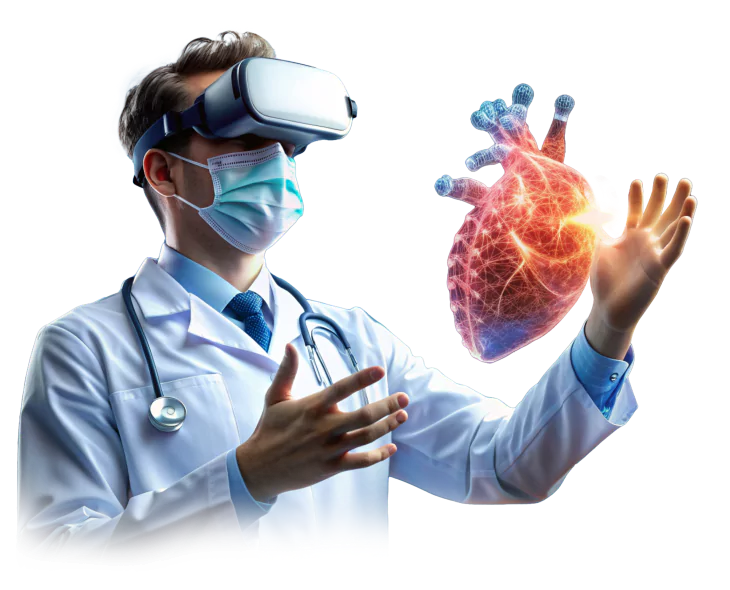
Immersive XR simulations enable surgeons to practice complex procedures repeatedly in a zero-risk environment, improving precision and confidence.
Hands-on, realistic scenarios activate visual and spatial learning, helping medical professionals master techniques in less time.
Interactive training strengthens neural connections, allowing healthcare staff to retain critical information longer and perform more consistently.